
OK, fair enough, this wasn't at Bradgate Park but its a nice photo I took out in Malaysia.. The tiger is an animal on the brink of extinction. As an animal it requires humans to leave it alone, to leave its food alone, to leave its habitat alone. It is specialised to an environment without humans. This specialism will unfortunately result in its extinction. The only animals that will survive the great human extinction will be those that can take advantage of our pathetic attempts to manage the land. Those creatures that can carry on in spite of our best efforts to kill the world will inherit "our" earth.
We like parks. We preserve parks because they have a use to us. The animals that survive at Bradgate Park will survive our time. Having looked at the mammals, the larger flying species and those species that inhabit the "grasszone" I will turn the attention of this blog to the flutterby population.

This is a
Small Heath butterfly (Coenonympha pamphilus). Though not particularly rare this has a butterfly conservation priority of high. Yet it has made its home in the short grasses of Bradgate Park. I took this picture whilst trying to find an adder. I suppose though this species is not as iconic, it is rarer.


This is a
Speckled Wood butterfly (Pararge aegeria) that I saw at Watermead recently. It was the first time I had knowingly seen one of these, so I was quite happy. It is strange that as soon as you have identified one, you then spot them everywhere.


This cheeky chappy is a
Small Skipper (Thymelicus sylvestris) that I also saw down on the meadows of Watermead Country Park. Unlike a lot of butterflies he didn't seem put off by the presence of the camera. Often, butterflies take off when you get too close, but this chap didn't mind one bit.


The final butterfly of the day is this
Ringlet butterfly (Aphantopus hyperantus) that I saw down on the Grand Union Canal. I didn't know what it was at first and had to use Wild About Britain to get it identified. Having now seen and identified theses butterflies I now almost see them everywhere.
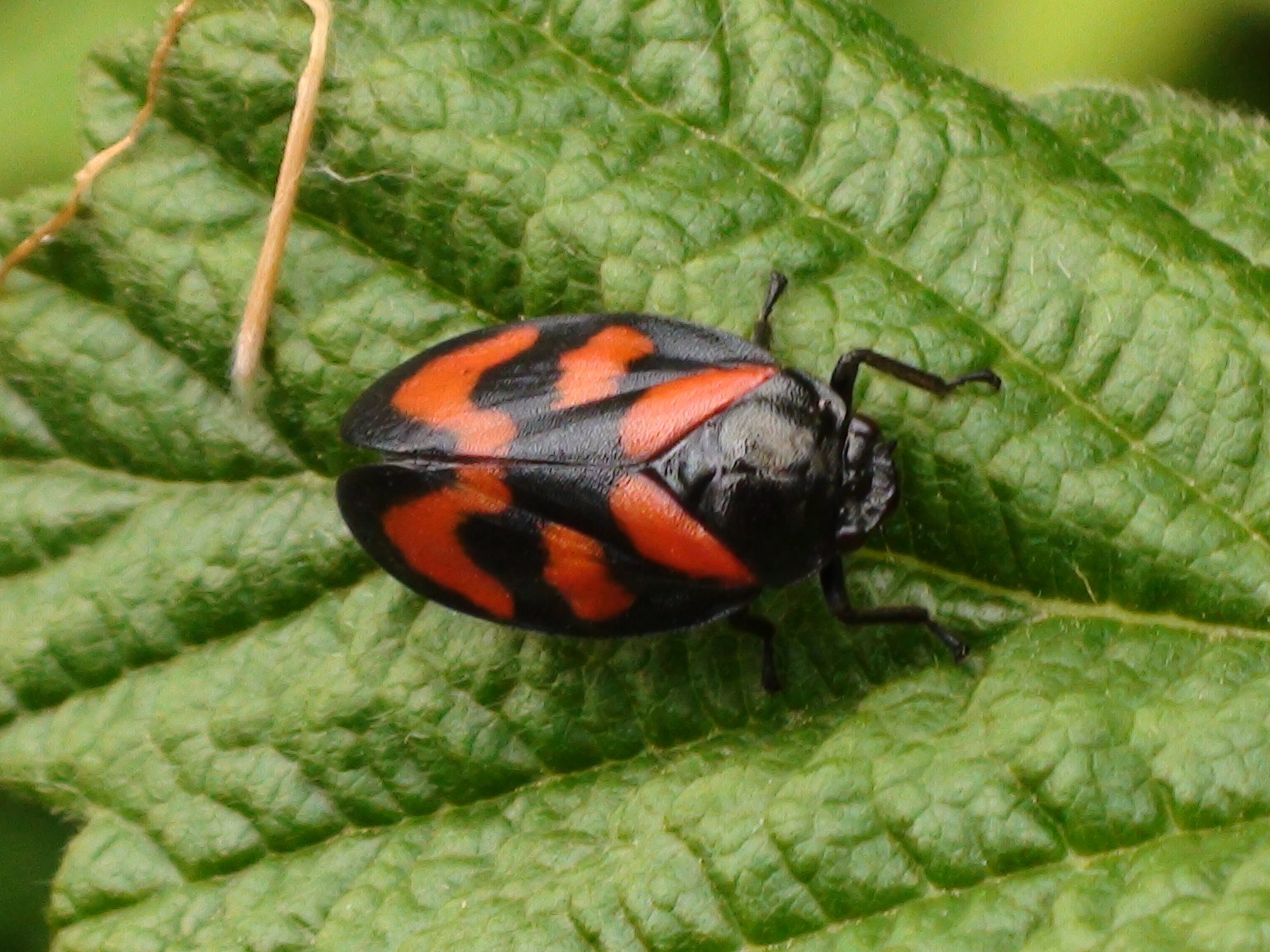 I have wanted to see one of these for ages. Black & red froghopper (Cercopis vulnerata) sunning itself on Blackberry leaves.
 Green-veined white (Pieris napi)
  Speckled Wood (Pararge aegeria)
 Dance fly (Empis tessellata)
 Nettle Weevil (Phyllobius pomaceus)
 The nymph of a Green Plant Bug (Calocoris alpestris)


 Some of our insect friends have not quite received the message that Autumn is here. A quick root around in the bushes will reveal a whole host of creatures still in their larval stages. Here in my garden a Green Lacewing (Chrysopa carnea) larvae is still eating up the last aphids.


 I wonder how many of these will survive the first frosts?