
Amongst the bracken of yesterdays walk, which was around Bradgate Country Park, you could hear birds calling. This constant twittering would be shattered every now and then by the racket caused by a wood pigeon taking off or a crow coming noisily to investigate who knows what, but soon after the calling would begin again. It was most noticeable when I was up to my eyeballs in bracken. Looking around I could see several species of birds acting cooperatively as they kept their eyes on me and calling warning calls to the other birds. The bird above is a
Yellowhammer (Emberiza citrinella).
 Joining the avian warning system was this Skylark (Alauda arvensis) above and a Male Reed Bunting (Emberiza schoeniclus). For several minutes I watched as they sang their warning, before moving to a different perch. Several times they would fly overhead to get a closer look at me and assess the danger.

Each of the several ponds had a dragonfly. One pond had two, but they fought with each other the whole time I was there. Obviously they are very territorial. I noticed that the upland environment seemed to favour one particular species. Basically all the ponds were colonised by the same species which is quite different to down in the Soar valley where different species live side by side. The one above is a Broad Bodied Chaser (Libellula depressa). As different to the Hawkers this dragonfly has a brightly coloured thick abdomen. Hence the name.


Away from the ponds I found this beautiful Common Darter (Sympetrum striolatum). This dragonfly is quite happy living without ponds and is commonly found in hedgerows etc. Being smaller than the Chaser it makes sense to find somewhere else to live rather than fight a creature twice your size for a space on a lily pad.
 Back in 2009 I spent a week in spring up in Scotland near the seaside town of Largs. Over the week several birds crossed my path. The Gannet (Morus bassanus) above made several dives whilst we watched.
 A Curlew (Numenius arquata).
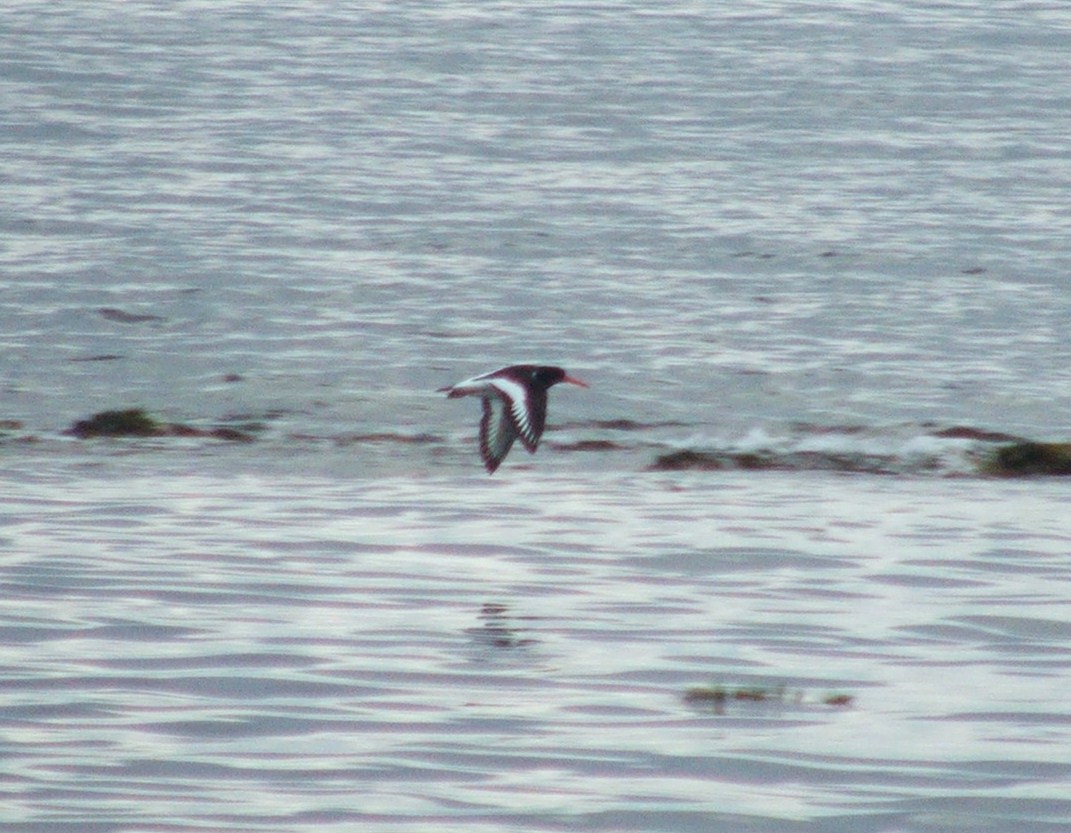 An Oystercatcher (Haematopus ostralegus).
 On the mainland near Largs, a couple of Shelduck (Tadorna tadorna) strolled along.
 On the ferry to Arran a Skylark (Alauda arvensis) hitched a ride.
 A first for me, a Black Guillemot (Cepphus grylle) from the Arran ferry.
 Another first for me, Red-breasted Mergansers (Mergus serrator) on the Island of Arran.
 On the ferry back from Arran, a Herring Gull (Larus argentatus) followed the boat looking for food. The red spot on its beak confirms its identity.

